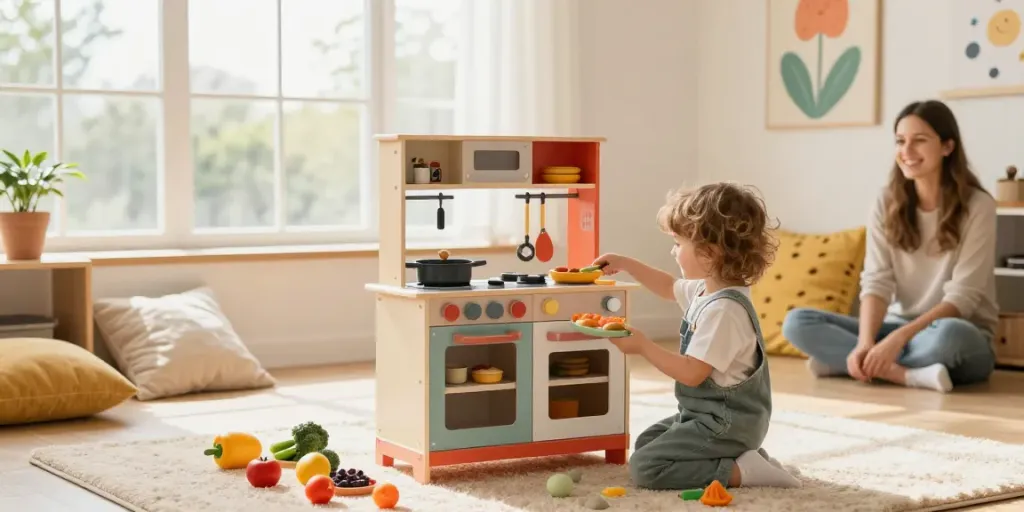
The Benefits of a Play Kitchen for Child Development
A play kitchen serves as more than just a toy; it is a powerful tool that fosters creativity and learning in children. By engaging in pretend play, children develop significant life skills. This article will explore the numerous benefits that a play kitchen brings to child development, highlighting how these interactive toys can nurture essential abilities.
Understanding Role Play and Imagination
Role play is a fundamental aspect of childhood development. When children engage with a play kitchen, they immerse themselves in imaginative scenarios. This type of play allows them to explore various roles—from chef to customer—enhancing their storytelling capabilities and expanding their vocabulary. By inventing stories around their play, they learn to express their thoughts and emotions, which fosters an early understanding of social dynamics and empathy.
Enhancing Motor Skills Through Play
Children develop fine and gross motor skills through the physical interaction with play kitchens. Activities such as stirring, chopping (with safe utensils), and setting tables help refine hand-eye coordination and dexterity. This is crucial during early years when children are still developing these essential motor skills. As they manipulate toy kitchen tools, they build muscle memory that translates into real-life tasks, such as cooking and cleaning.
Social Skills and Cooperative Play Dynamics
When children play together with a kitchen set, they learn to communicate, negotiate roles, and collaborate on tasks. This cooperative play is instrumental in teaching social skills such as sharing, taking turns, and respecting others' contributions. By participating in group play, children also learn conflict resolution, important for their interactions outside the playroom.
Choosing the Right Play Kitchen for Your Child
Selecting the right play kitchen is crucial for maximising your child's engagement and development. Not all play kitchens are created equal, so understanding key features can significantly influence your purchase decision.
Key Features to Look For in Play Kitchens
When evaluating play kitchens, consider features that enhance playability:
- Interactive Elements: Look for kitchens that include functional parts such as knobs that turn, doors that open, and sinks with moving taps.
- Size: Ensure the kitchen is appropriately sized for your child’s age to encourage active play without overwhelming them.
- Accessories: A set that includes pots, pans, utensils, and pretend food can enrich the play experience.
Material Choices: Wood vs. Plastic
When it comes to materials, both wood and plastic have their advantages. Wooden kitchens often offer durability and a classic aesthetic, making them a long-lasting investment. Their sturdiness also lends itself to rough play. On the other hand, plastic kitchens tend to be lighter, often have vibrant colors, and may come with additional features like lights and sounds, enhancing the immersive experience for children.
Age-Appropriate Design Considerations
It's essential to choose a kitchen that fits the developmental stage of your child. Kitchens designed for toddlers and preschoolers typically have rounded edges and are lower to the ground, promoting safe play. As children grow, opting for more intricate designs can keep them engaged. For older kids, kitchens with additional functionalities like baking ovens or dishwashers can further inspire creativity.
Popular Trends in Play Kitchen Designs for 2026
As we move into 2026, several exciting trends are emerging in play kitchen designs that reflect current values and innovations. These trends not only enhance play experiences but also contribute to more sustainable and functional play environments.
Sustainable Materials and Eco-Friendly Options
With an increasing emphasis on environmental responsibility, many manufacturers are focusing on sustainable materials. Play kitchens made from recycled plastics or sustainably sourced wood are becoming popular. These kitchens not only teach children about environmental stewardship but also provide parents with peace of mind regarding safety and sustainability.
Multifunctional Playsets for Space-Saving Solutions
As urban living becomes more prevalent, multifunctional playsets are gaining traction. Kitchens that can transform into dining areas or even craft stations are ideal for maximising limited space. These designs encourage diverse play and can grow with the child, serving different purposes as they age.
Incorporating Technology into Traditional Play Kitchens
Introducing technology into play kitchens can offer a modern twist to traditional play. Interactive features such as sound effects, lights, and even cooking apps linked to the toy can enhance engagement. These technological integrations can mirror real-life cooking experiences, making play more realistic and educational.
Setting Up Your Play Kitchen: Tips for Parents
Creating an inviting and stimulating play environment for your child's kitchen can significantly enhance their experience. Here are some tips to consider:
Creating an Engaging Play Space at Home
Designate a specific area in your home for the play kitchen. This should be a safe, clutter-free, and easily accessible space where children can freely engage in imaginative play. Decorate the area with fun elements like wall posters or a play menu, fostering a restaurant-like atmosphere.
Encouraging Independent Play and Exploration
While it might be tempting to join in during playtime, allow your child some independence. Encourage them to explore their kitchen alone or with friends, as this promotes independence and self-confidence. Set up scenarios where they can practice cooking and serving with minimal intervention.
Incorporating Learning and Cooking Activities
Use the play kitchen to incorporate learning experiences. For example, when pretending to prepare meals, discuss the nutritional value of different foods, or practice counting and measurements with toy food items. This not only builds foundational skills but also ties real-life scenarios into their imaginative play.
Frequently Asked Questions About Play Kitchens
What age should a child start using a play kitchen?
Typically, children aged 2 to 3 years can start using a play kitchen, as this is when they begin to engage in imaginative play. However, the age-appropriateness of a specific kitchen can vary based on its design and features.
Are play kitchens worth the investment?
Absolutely. The benefits of developmental skills gained through play kitchens often far outweigh the initial costs. They encourage creativity, improve motor skills, and enhance social interactions among peers.
How do I maintain and care for a play kitchen?
Regular upkeep is essential to ensure longevity. For wooden kitchens, clean with a damp cloth and avoid harsh chemicals. Plastic kitchens can be cleaned with mild soap and water. Regularly check for loose parts and tighten them to ensure safety.
What accessories enhance a play kitchen experience?
Accessories such as play food, utensils, dishware, and even aprons can significantly enhance the play experience. You can also include themed sets such as baking or barbecue accessories to further expand their imaginative play.
Which brands are recommended for high-quality play kitchens?
Some well-respected brands include KidKraft, Step2, and Melissa & Doug, known for producing durable and engaging play kitchens. Brands that use sustainable materials are increasingly popular for eco-conscious parents looking for high-quality options.